
Sally K. Norton

Vitality Coach, Speaker & Health Consultant

  • Home
  • About
    • Interviews, Talks, Media and More
  • Symptoms
  • Relief
    • Nourishment
    • Results
  • Science
    • Oxalate Basics
  • Books
    • Data Companion
    • The Essential Low-Oxalate Cookbook
    • International Editions
    • La Cuisine Low-Oxalate
    • Low Oxalate Recipe Book [PDF only]
  • Support
    • Upcoming Events
    • Support Groups
    • Shop / Downloads
    • Sign-up for News and Updates
    • Speaking and Presentations
  • Recipes
    • Fundamentals
    • Sauces and Condiments
    • Beverages
    • Finger Foods
    • Soups
    • Salads
    • Side Dishes
    • Meats and Seafood
    • Treats
  • Blog
    • Table of Contents
  • Contact

2015-01-12 by Sally K Norton

I missed a key footnote in college about oxalates in food

Sweet potatoes, walnuts, and kiwi are no longer my friends. Apparently, they never were. I just never got the memo.

My nutrition education hadn’t warned me that a variety of vegetables, nuts, and fruits could cause health problems due to their oxalate content. Instead, my college textbooks suggested that toxic oxalate is confined to a short list of five foods. My old Basic Food text states: “… oxalic acid, which occurs in spinach, chard, beet greens, and rhubarb, is toxic” (p.17)1. Another textbook, Normal and Therapeutic Nutrition, added coco to this same list, bringing the total up to five foods with oxalic acid (p. 134)2. Later in the therapeutic section of Normal and Therapeutic Nutrition, the authors added 15 more foods to the list in the one and only paragraph devoted to dietary restriction of oxalate (p. 675). The oxalate-restricted diet is described in under 60 words.

Truth be told, lab methods for measuring oxalate in foods did not become reliable until about 1980. Today in 2015, the nutrition profession still lacks complete or accurate reference for the oxalate content of foods and supplements. And, we have not fully described or tested the hypothetical oxalate-restricted diet, because we lack sufficient data and other tools needed to do so. Such a diet can only be created by an opt-in method of building a diet with foods that have been accurately tested for oxalate content. Given the ubiquitous nature of oxalate in foods, the old notion of avoiding the top 20 high-oxalate foods is illogical and mathematically unsound. Yet, this is exactly the standard of practice today. In the rare instance when the oxalate-restricted diet is prescribed, the patient is handed an inaccurate list of the highest oxalate containing foods and told to limit these foods to occasional, moderate portions.

The chief message contained in my college text books about oxalic acid in foods is this: Oxalic acid reduces the amount of calcium that can be absorbed from very high oxalate foods to nearly zero, although the food composition reference tables list spinach and other greens as containing calcium, in significant amounts. From a nutritional standpoint these foods lack calcium because it is bound to oxalic acid and cannot be used by the body. These two textbooks disagree about the resulting loss of calcium availability as a result of adding chocolate (oxalic acid) to milk. When I was in school designing menus to meet nutritional requirements laid out by the FDA, we were not graded down for including, and counting, un-available calcium (in known high oxalate foods) in our meal plans. Oxalate was considered a non-issue back then, and still is today. In fact, high-oxalate foods are widely and loudly promoted as healthy foods.

My college textbooks also reassured me that oxalic acid “does not cause illness in the amounts that are normally consumed”. In today’s world proclaiming the healthy virtues of veganism, raw foods, and vegetable juicing, this dismissive and untested assertion sounds irresponsible. There is a growing body of evidence that oxalates can accumulate in tissues, not just the kidneys, which can lead to a variety of connective tissue and other problems in susceptible individuals. My Basic Foods book promoted the idea of increasing consumption of fruits and vegetables without a thought to the possibility that people could get into trouble with excessive amounts of naturally occurring oxalate in their foods. It didn’t occur to them that I had (while in college) a garden patch of Swiss chard which I ate in large portions every day for 2 months. At the time I was using crutches and 3600mg of ibuprofen to curb the constant foot pain that persisted after having surgery on both of my feet three years earlier in 1986. Today, I am pretty sure about the reason my feet were not healing properly – the toxic oxalic acid in my vegetarian diet and already in my body was interfering with healing.

So the seed was never planted in my head while in college, that over-doing Swiss chard and other high-oxalate foods could be trouble. It turns out that it can bring one’s productive life to a halt, as it did mine – several times.

References

  1. June C. Gates. Basic Foods. (Holt, Rinehart and Winston, 1981).
  2. Corinne H. Robinson & Marilyn R. Lawler. Normal and Therapeutic Nutrition. (Macmillan Publishing Co. Inc., 1982).
2015-01-12 by Sally K Norton

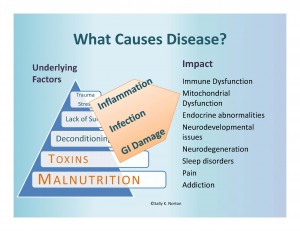
What is making us sick?

Underlying disease factors listed in a pyramid, which casue the proesses of inflammation, infection and GI damage, which lead to list of medial problems

Nutritional deficiencies and excessive exposure to toxins, both natural and man made are at the root of our health problems. These issues must be addressed to reverse disease.

2014-12-29 by Sally K Norton

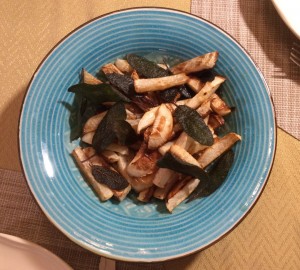
Easy Fried Turnips with Crispy Sage

Fried turnip sticks with crispy sage

Garden turnips can be yummy!

  • Servings: 4
  • Difficulty: Easy
  • Print

Makes a good left-over.

1 – 1 1/2 lb. Turnips, peeled, and cut into 1/3-inch cubes
Ghee (2 – 4 Tbs.)
Duck Fat (2 – 5 tsp.)
Mineral Salt to taste
White pepper, optional
Fresh Sage leaves, optional

Use a large frying pan to cook the turnips in hot ghee and duck fat for about 5 minutes, turn cook other side for five minutes until lightly browned.
Add salt.
Remove turnips from the pan.
For optional garnish, fry sage leaves in the hot fat that is left in the pan until they are crisp.
Pour remaining fat over the turnips. Sprinkle the fried sage leaves over the top. Serve.

2014-12-19 by Sally K Norton

Sugar

Sugar, Sugar Everywhere
Tis the season for hooking you on sugar.
Getter hyper-jazzed on sugar is optional.

Christmas is a holiday about new beginnings and the magic and wonder of ordinary life. Intentionally placed at the winter solstice, Christmas, like the solstice marks the end of the ever shortening days. Finally, the days are getting longer again. Still it is the dark time, and a time to cheer each other. So, off we go retail treasure-hunting and stuffing ourselves with sugar. We are easy prey for merchants of all stripes who coat the checkout with sugar in its many forms seductively dressed in both nostalgia and novelty. Peppermint bark, and other “sugarplums” so everywhere, so obtainable, promise to fulfill longings you didn’t know you had. 

Do you resist? Are you successfully avoiding candy, cookies, and the like? If so, does it leave you feeling left out?

Want a simple treat without damaging your health in the process?
Try ultra humble and easy baked apples (see post with recipe)

Tip: good food tastes best when you are hungry. Brain-numbing sugars, on the other hand, excite the senses even when you are full and over-fed. This turns “food” into an addictive substance from which you have no natural defenses. You need a plan for maintaining your sanity, waist-line, and good sense.

2014-12-19 by Sally K Norton

Cauliflower

Cauliflower

01KITCHEN2-articleLargeCelebrate a low-oxalate favorite of mine, cauliflower. See the NYTimes’s (David Tanis) praise of the mild-flavored, versatile, low-oxalate, low-carb Cauliflower. Cauliflower also keeps well both in the raw state and cooked as a left-over. It is a convenient, make-ahead vegetable. Cooked, 1/2 cup contains only about 2.7mg oxalate; this is about 1/10 of the amount of oxalate in potato. When seasoning your cauliflower dish, skip high-oxalate spices like turmeric. Instead use low-oxalate seasonings such as garlic, mustard, lemon, and ginger.

Read more at the New York Times.

2014-02-01 by Sally K Norton

Ginger Baked Apples

This recipe is quick and easy. Excellent dish for brunches and pot-lucks.

Ginger Baked Apples

  • Servings: 6
  • Time: 15 minutes (prep); 65 minutes (total)
  • Print

Preheat Oven to 325°F

Ingredients

6 – 7 large Gala apples
3-4 T ghee or butter, cut into rectangular chunks that will fit into the apple core (or melt)
6 T dextrose or 4 T succanat sugar
1½ “ piece fresh ginger, peeled and cut into slim 1”-long match sticks
Juice of 1 lemon

Instructions

  1. Core apples from the stem side, but not entirely through the bottom.
  2. Set the apples in a baking dish, and add a tablespoon of water to the bottom of the dish.
  3. Into the core space of each apple, place: 2 tsp. dextrose or 1 1/2 tsp. sugar, ghee or butter chunks, ginger match sticks, and lemon juice.
  4. Bake uncovered until the skins show signs of starting to split or are oozing a bit of foam (approximately 50 minutes).
  5. Serve warm as is or with fresh whipped cream.

  • « Previous Page
  • 1
  • …
  • 7
  • 8
  • 9

Search on SallyKNorton.com

Shopping Cart

Number of items in cart: 0

  • Your cart is empty.
  • Total: $0.00
  • Checkout
Click to sign up for email list

Upcoming Events

  • Group Meeting and Presentation

    2026-12-03 @ 10:00 am - 12:00 pm
    US Eastern Time
    See more details

  • Group Meeting and Presentation

    2026-12-15 @ 11:00 am - 1:00 pm
    US Eastern Time
    See more details

  • Group Meeting and Presentation

    2026-12-30 @ 2:00 pm - 4:00 pm
    US Eastern Time
    See more details

Connect

  • Home
  • About
  • Shop
  • Recipes
  • Support
  • Blog
  • Contact
  • Table of Contents
  • Privacy Policy

Visit Sally’s Other Sites

  • YouTube
  • LinkedIn
  • Facebook
  • Instagram

Copyright © 2026 — Sally K. Norton • All rights reserved.

Loading Comments...