A Record-Breaking Smoke Season
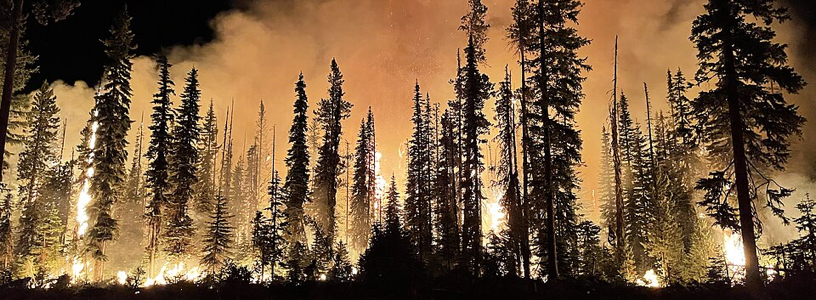
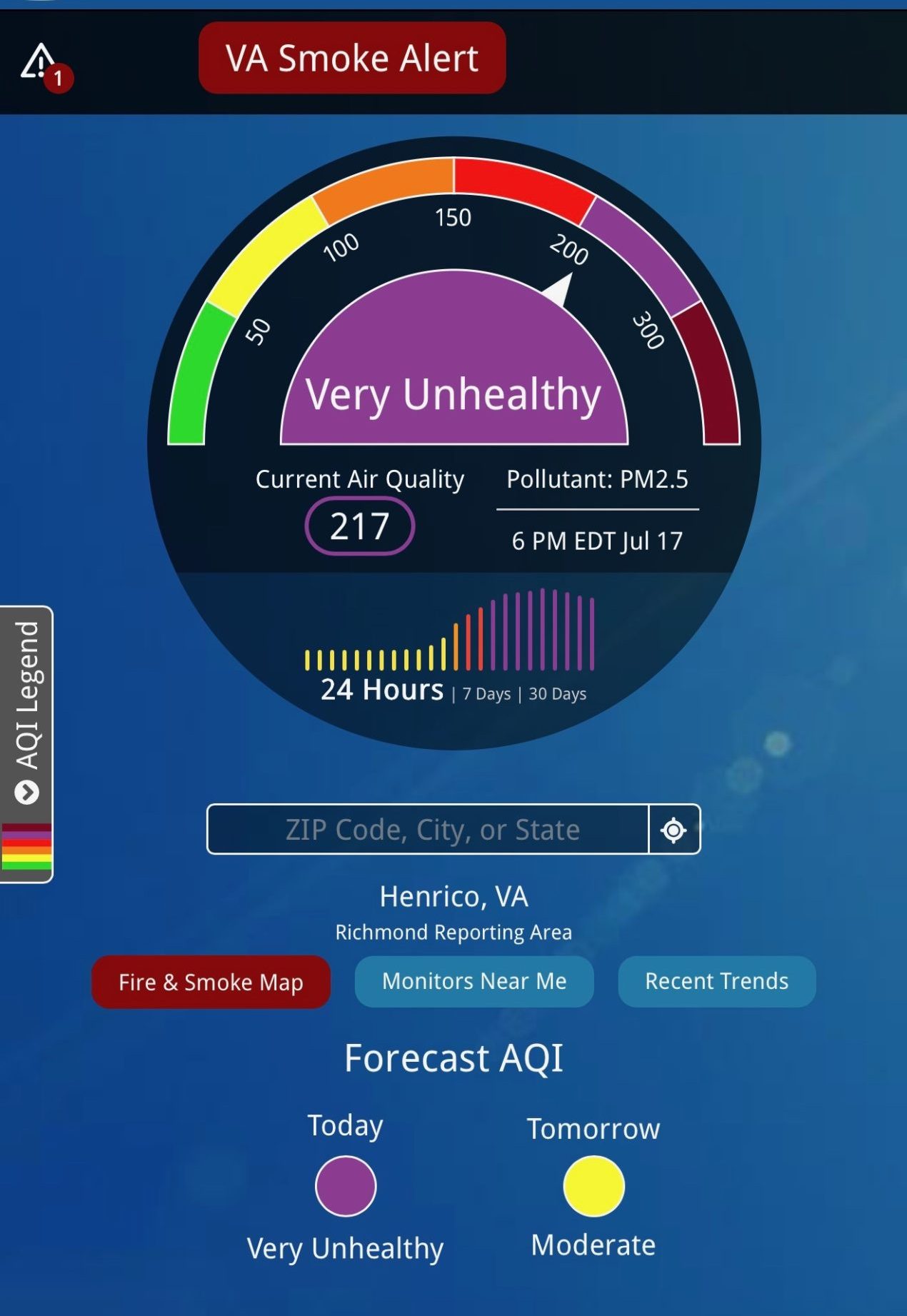
Here it is July, and summer fun in the U.S. and Canada has been spoiled by smoke from more than 800 wildfires burning across Canada, wreaking havoc on air quality across the Midwest, Northeast, and mid-Atlantic. More than 100 million people in eighteen states and the District of Columbia find themselves under air quality alerts, with cities including Toledo, Milwaukee, and Detroit registering Air Quality Index readings above 500, a number that blows past the 300 mark that officially means “hazardous” (CBS News; CNN; NBC News; see current coverage below).
What PM2.5 Actually Does To You
Understandably, the news cycle has fixated on PM2.5, particulate matter measuring 2.5 micrometers or smaller, tiny enough that about 30 of them lined up side by side would span the width of a single human hair, small enough to be inhaled deep into the lungs, or worse yet, into the bloodstream. Size is what makes them dangerous: particles that small cross directly from the lungs into circulation, where they trigger oxidative stress and systemic inflammation that ripple out to the heart, blood vessels, and even the brain, real, documented mechanisms, not just a correlation showing up in hospital records (Li et al., 2022). And the hospital records back it up: a systematic review of the biomass-burning literature ties PM2.5 from fires to increased all-cause mortality, cardiovascular mortality, and respiratory hospital admissions (Karanasiou et al., 2021), and a companion review of wildland fire smoke specifically found the same pattern in respiratory hospitalizations, emergency visits, and asthma and COPD flare-ups, with cardiovascular events now entering the picture too (Adetona et al., 2016).
All true, all worth knowing, and all over the news.
The Bark Was Already Loaded With Oxalate
What is not all over the news, because it is basically never all over the news, is what that brown-orange cloud of soot, ash, and embers descending on North America brings with it: oxalate.
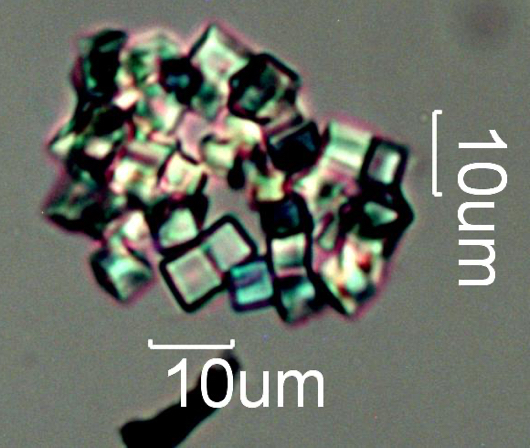
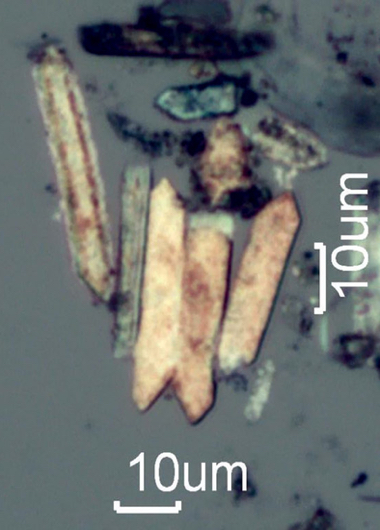
Many trees and woody plants, conifers especially, install microscopic calcium oxalate crystals, called phytoliths, in their bark, wood, and needles, as a structural defense against insects and disease. As trees burn, these crystals do not vanish in the flames. Instead, they transform. Depending on how hot the burn ran, calcium oxalate (chemically, whewellite, the hydrated form) has a thermal wardrobe change: hydrated crystal, to anhydrous calcium oxalate, to calcium carbonate, to calcium oxide at the highest temperatures, each stage with its own distinct optical signature under polarized light (Crutcher, 2020; Crutcher & Crutcher, 2019).
Forensic microscopist Russ Crutcher, who analyzes wildfire debris recovered from inside homes for insurance and environmental claims, has documented that after a fire moves through, these oxalate phytoliths are one of the most reliable fingerprints of wildfire exposure found on indoor surfaces.
Translation: a real portion of the ash drifting into homes and lungs during a wildfire is thermally cooked plant oxalate, dressed up in a new chemical costume, but underneath it all, it’s still oxalate.
The Marble Statue Plot Twist
And because oxalate never misses a chance to be complicated, here’s the twist inside the twist: conservators deliberately paint diluted oxalic acid onto marble statues and limestone monuments to protect them from acid rain. Calcium oxalate barely dissolves in acid, unlike the calcium carbonate that marble and limestone are made of, so it forms a thin, tough shield on the stone’s surface, resistant to exactly the kind of acidic atmospheric assault this article is about (Cezar, 1998; Singh & Yadav, 2023). The same molecule I would argue is quietly stressing human tissue is, quite literally, on the payroll defending Renaissance sculpture from the weather.
Wildfires Also Make Oxalate From Scratch
Worse still, the spewing of oxalate does not stop at the crystals from bark. Wildfires also cook up an entirely fresh batch of oxalate on the fly, straight out of the atmosphere itself. Wildfires don’t just release the oxalate particles already stored in plants; they help create new oxalate in the air. As smoke mixes with moisture in clouds, natural chemical reactions convert smoke compounds into oxalic acid and oxalate, adding even more oxalate particles to the mix (Zhang et al., 2017).
Here is a stat worth pausing on, and then immediately putting in its place. Chemists who track this stuff sort organic acids into families based on how many acid groups each molecule carries, a distinction that matters to them because it changes how a compound dissolves, reacts, and grabs onto metals inside a cloud droplet, not because it matters to your lungs. Within one narrow, mostly unheard-of family, oxalic acid is the undisputed heavyweight, sometimes making up close to 5 percent of all the dissolved organic material floating in polluted air downwind of major burn regions (Zhang et al., 2017). That is a real number, and a bigger one than most single pollutants manage, but it is a biggest-fish-in-a-small-pond statistic, not a verdict on how dangerous that fish is.
Using single-particle mass spectrometry at a remote mountain site, the same researchers found that more than 70 percent of the oxalate-containing particles detected in and around cloud droplets were traveling with aged biomass-burning particles, meaning wildfire smoke itself was supplying the organic building blocks, chiefly glyoxylate, that in-cloud aqueous chemistry then converts straight into oxalate (Zhang et al., 2017).
Oxalate production in clouds occurs not only because of wildfires. Studies of urban haze out of Shanghai and southwestern China found city-air oxalate tracking closely with biomass-burning markers and with cloudy, humid conditions, the same aqueous chemistry spotted at that remote mountain site, just hovering over polluted cities and thickening the haze while it is at it (Jiang et al., 2014; Guo et al., 2021).
Does Pollution Make Plants Produce More Oxalate?
There is even another twist in which pollution seems to prompt plants to produce more of the stuff. One of the earliest studies linking pollution and plant oxalate examined calcium oxalate crystal patterns in ginkgo leaves at varying distances from pollution sources. Leaves from cleaner air contained small, sparse, well-behaved crystals. Leaves from dirtier air contained larger, denser, more chaotic clusters of crystals piled along the veins (Umemoto & Hozumi, 1972).
Nobody has rerun that study with today’s instruments on today’s trees, so consider it an open question rather than settled science, but it raises a slightly infuriating possibility: Does pollution goad plants to stockpile more oxalate, which then becomes more fuel for the next fire, vaporizing and redistributing as airborne particles?
The Question Nobody’s Asked
Despite the temptation, here is the part I will not oversell, because overselling is exactly the kind of sloppy science I object to: no one has yet studied whether inhaling or absorbing thermally altered plant oxalate from wildfire ash, or breathing atmospheric oxalic acid and oxalate formed in smoke-laden clouds, actually affects the human body. That link does not yet exist in the literature, and it is not because oxalate has some track record of being biologically harmless once it leaves your salad plate and enters your lungs. Where oxalate crystals do form inside the body, in the kidney, the mechanism is already well characterized, and it is not gentle: sharp, insoluble calcium oxalate crystals trigger oxidative stress, activate the NLRP3 inflammasome, damage mitochondria, and set off a full inflammatory cascade in the surrounding tissue (Gu et al., 2022). That is a real, documented biological pathway, just not one anyone has yet gone looking for in lung tissue exposed to wildfire ash or airborne oxalic acid. An unstudied exposure route is not the same thing as a safe one.
What does exist, solidly, across multiple independent research groups who were not talking to each other and were not thinking about human health at all, is the chemistry showing that wildfire smoke is an oxalate delivery system on two separate fronts. That chemistry is well documented; its implications for human health are not, and that gap, the absence of anyone asking the question, is in my opinion itself the story.
What To Do About It
Don’t wait until researchers finally devote the effort to do the missing research. No matter which particles are causing the trouble, the practical advice for wildfire smoke is the same. On smoky days, stay indoors with the windows closed, run a HEPA air filter, and save the outdoor workouts and yard care chores for a less-polluted day. When it’s time to clean up, grab a damp cloth instead of a broom. Dry sweeping doesn’t remove the finest particles; it gives them an encore performance, sending them right back into the air for another lap through your lungs. Oxalate-bearing or not, that ash on your windowsill has earned a damp cloth, not an open invitation back into your home or into your lungs.
Sources
Adetona, O., Reinhardt, T. E., Domitrovich, J., Broyles, G., Adetona, A. M., Kleinman, M. T., Ottmar, R. D., & Naeher, L. P. (2016). Review of the health effects of wildland fire smoke on wildland firefighters and the public. Inhalation Toxicology, 28(3), 95–139. https://doi.org/10.3109/08958378.2016.1145771
Cezar, T. M. (1998). Calcium oxalate: A surface treatment for limestone. Journal of Conservation and Museum Studies. https://doi.org/10.5334/jcms.4982
Crutcher, R. (2020). Detecting wildfire emissions in the indoor environment. Microlab Northwest. https://doi.org/10.13140/RG.2.2.29220.09606
Crutcher, R., & Crutcher, H. (2019). Calcium oxalate phytoliths in environmental samples. The Microscope, 67, 3–11.
Gu, Y., Shen, Y., Chen, W., He, H., Ma, Y., Mei, X., Ju, D., & Liu, H. (2022). Protective effects of interleukin-22 on oxalate-induced crystalline renal injury via alleviating mitochondrial damage and inflammatory response. Applied Microbiology and Biotechnology, 106(7), 2637–2649. https://doi.org/10.1007/s00253-022-11876-4
Guo, W., Zhang, X., Zhang, Z., Zheng, N., Xiao, H., & Xiao, H. (2021). Low-molecular-weight carboxylates in urban southwestern China: Source identification and effects on aerosol acidity. Atmospheric Pollution Research, 12(8), 101141. https://doi.org/10.1016/j.apr.2021.101141
Jiang, Y., Zhuang, G., Wang, Q., Liu, T., Huang, K., Fu, J. S., Li, J., Lin, Y., Zhang, R., & Deng, C. (2014). Aerosol oxalate and its implication to haze pollution in Shanghai, China. Chinese Science Bulletin, 59(2), 227–238. https://doi.org/10.1007/s11434-013-0009-4
Karanasiou, A., Alastuey, A., Amato, F., Renzi, M., Stafoggia, M., Tobias, A., Reche, C., Forastiere, F., Gumy, S., Mudu, P., & Querol, X. (2021). Short-term health effects from outdoor exposure to biomass burning emissions: A review. Science of the Total Environment, 781, 146739. https://doi.org/10.1016/j.scitotenv.2021.146739
Li, W., Lin, G., Xiao, Z., Zhang, Y., Li, B., Zhou, Y., Ma, Y., & Chai, E. (2022). A review of respirable fine particulate matter (PM2.5)-induced brain damage. Frontiers in Molecular Neuroscience, 15, 967174. https://doi.org/10.3389/fnmol.2022.967174
Singh, M. R., & Yadav, R. (2023). Formation of calcium oxalate patinas as protective layer on basaltic stone surfaces of 17th century Raigad Hill Fort, India. Heritage, 6(7), 5374–5392. https://doi.org/10.3390/heritage6070283
Umemoto, K., & Hozumi, K. (1972). Correlation between the degree of air pollution and the distribution of calcium oxalate crystals in the gingko leaf. Microchemical Journal, 17(6), 689–702. https://doi.org/10.1016/0026-265X(72)90138-5
Zhang, G., Lin, Q., Peng, L., Yang, Y., Fu, Y., Bi, X., Li, M., Chen, D., Chen, J., Cai, Z., Wang, X., Peng, P., Sheng, G., & Zhou, Z. (2017). Insight into the in-cloud formation of oxalate based on in situ measurement by single particle mass spectrometry. Atmospheric Chemistry and Physics, 17, 13891–13901. https://doi.org/10.5194/acp-17-13891-2017
Current News Coverage Cited
CBS News. (2026, July). Maps show wildfire smoke forecast, air quality alerts due to pollution from Canadian, Minnesota fires. https://www.cbsnews.com/news/wildfires-smoke-millions-exposed-midwest-northeast-us/
CNN. (2026, July 17). Wildfire smoke is driving terrible air quality in major cities, but relief is coming. https://www.cnn.com/2026/07/17/weather/smoke-forecast-northeast-midwest
NBC News. (2026, July). Canada wildfire smoke map: Health risks as poor air quality hits the Midwest and northern states. https://www.nbcnews.com/data-graphics/canada-wildfire-smoke-map-2026-us-states-air-quality-health-risks-rcna588051
Leave a Reply