Sally K. Norton

Vitality Coach, Speaker & Health Consultant

  • Home
  • About
    • Interviews, Talks, Media and More
  • Symptoms
  • Relief
    • Nourishment
    • Results
  • Science
    • Oxalate Basics
  • Books
    • Data Companion
  • Support
    • Upcoming Events
    • Support Groups
    • Shop / Downloads
    • Sign-up for News and Updates
    • Speaking and Presentations
  • Recipes
    • Fundamentals
    • Sauces and Condiments
    • Beverages
    • Finger Foods
    • Soups
    • Salads
    • Side Dishes
    • Meats and Seafood
    • Treats
  • Blog
    • Table of Contents
  • Contact

February 23, 2017 by Sally K Norton

Arterial Plaque Contains Oxalate

Did you know that oxalates can damage your heart and circulatory system, contributing to heart disease?

Our kidneys clean the blood. All of the oxalate that kidneys excrete every day gets there by traveling in our blood stream. The job of delivering toxic oxalate to the kidneys puts the arteries in harm’s way.

Researchers Don’t Expect Oxalate in Tissues

When oxalate deposits are found in tissues (other than the kidneys) doctors and researchers are surprised that the kidneys are working just fine. They believe that before oxalate collects in our bodies, the oxalate must first ruin the kidneys. This passage, below, from UCLA Pathologists Fishbein and Fishbein illustrates this conventional belief.

In a review of coronary arteries from 80 patients, we found 4 cases in which there were prominent oxalate deposits within the atherosclerotic plaques in coronary arteries. Oxalate deposits were also present in the media of arteries, the thyroid gland, and other organs, but not the kidneys, and the patients surprisingly did not have renal failure. (Fishbein and Fishbein 2009, p. 1315)

This expectation is based on the long-standing but unproven assertion that detectable (non-renal) oxalate deposits are a product of poor kidney function. In a previous report published by the journal Cardiovascular Pathology in 2008 they propose the new term “atherosclerotic oxalosis” to describe arterial plaque containing oxalate crystals.

This report was part of a study of coronary atherosclerosis in HIV infected patients, using atherosclerotic plaque samples from the National Neurologic AIDS Bank.

Whenever oxalate flows into the kidneys and other tissues in amounts beyond what they can handle (exceeding a capacity threshold), oxalate overload can occur. This can trigger accumulation of oxalate in the body. For some people this shows up as kidney deposits and kidney stones.  But oxalate can encounter, be stashed, and be left behind in any susceptible tissue in the body, not just the kidneys.

Other Forms of Oxalate are Usually Overlooked

Note the use of the term prominent in the comment quoted above. The researchers do not mention trace deposits, nano-crystals, ionic oxalate, and other chemical forms of oxalate in the examined tissues as a possibility. Unexplored, no doubt.

There is also no mention of the age of the specimens at the time of examination. We know that oxalate deposits rapidly fade in biopsied tissue and cadavers. (It would be interesting to see a study specific to arteries and arterial plaque to investigate the durability of less prominent oxalate deposits in plaque.) To reliably find oxalate, living tissues need to be examined within two hours of death or excision, but often are not. This may help to explain why oxalate in the arterial plaque is assumed to be rare, it can be hard to detect.

Calcium oxalate may be a factor in “hardening arteries”. And it may be more common than this research suggests, given the crude detection methods we use. Artery plaque oxalosis is most likely in people with metabolic stress such as HIV, metabolic syndrome, chronic inflammation, diabetes, insulin resistance, chemical injury, poly-pharmacy, auto-immune conditions, and so on. We don’t know how oxalate may harm “healthy” people with “perfect” arteries.

Over and over, science has demonstrated that oxalate can collect in any tissue in the body—and not necessarily due to kidney problems.

Reason enough to become oxalate aware!


Here is an update: an 2017 report of an Italian study looking at heart artery plaque in 229 people, obtained through a tissue bank. They did a special microanalysis in 41 plaque samples to differentiate between two types of calcifications: calcium oxalate vs hydroxapatite. 37% of the plaques were primarily calcium oxalate and 63% were hydroxyapatite. Oxalate calcifications were detected mainly in unstable plaques in 27% of cases, whereas HA tended to dominate unstable plaques 60% of the time.
Of course, unstable plaques are the ones that tend to break loose and block fine capillaries, restricting blood flow to brain or heart tissues thus causing non-hemorrhagic stroke or heart attacks . https://www.ncbi.nlm.nih.gov/pubmed/28739184

August 24, 2015 by Sally K Norton

Radio Program: Gut Health, Inflammation, and Oxalate in Foods

Check this out. I was recently interviewed about Oxalates and Health by Sunny Gardener on Lightly On The Ground Radio on 97.3 WRIR, in Richmond VA. This show aired on Aug. 12, 2015.

Sunny and I discussed the back bone of all disease: inflammation.  We cover the connection between changes in the bacteria in our colons and increased susceptibility to inflammation.  We touched on oxalates in foods as a possible contributor to gut health deterioration and inflammatory illnesses.

https://sallyknorton.com/wp-content/uploads/2015/08/2015-08-12-skn-on-lightlyontheground.mp3


Thank you to WRIR’s Lightly On The Ground, produced in Richmond VA.

August 20, 2015 by Sally K Norton

Taking Vitamin C? Try a Salad Instead.

If you are taking 500 mg or more vitamin C daily, there is something you need to know. Vitamin C (in excess) can become a toxin that can lead to kidney stones, arthritis, other pain conditions, and perhaps, compromised brain function.  For decades we have been told that vitamin C is good for us and may help prevent colds. But too much of a good thing can make trouble. (Research has not been able to confirm the theory that vitamin C supplements help to prevent colds unless you routinely engage in physically demanding work or endurance sports.) [Read more…]

June 4, 2015 by Sally K Norton

Standing on Steady Ground: Resisting New Ideas

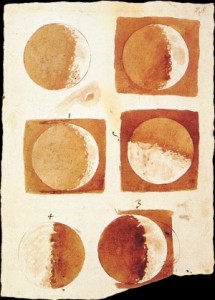
"Galileo moon phases" by Galileoyh Most people will find certainty and safety by subscribing to widely held ideas, regardless of the “truth” of those ideas.  Likewise, institutions and the people that are governed by them resist new explanations for phenomena. A classic example of this is found in the dawn of two radical ideas that 1) the earth moves around in space, and 2) the earth revolves around the sun. [Read more…]

January 12, 2015 by Sally K Norton

I missed a key footnote in college about oxalates in food

Sweet potatoes, walnuts, and kiwi are no longer my friends. Apparently, they never were. I just never got the memo.

My nutrition education hadn’t warned me that a variety of vegetables, nuts, and fruits could cause health problems due to their oxalate content. Instead, my college textbooks suggested that toxic oxalate is confined to a short list of five foods. My old Basic Food text states: “… oxalic acid, which occurs in spinach, chard, beet greens, and rhubarb, is toxic” (p.17)1. Another textbook, Normal and Therapeutic Nutrition, added coco to this same list, bringing the total up to five foods with oxalic acid (p. 134)2. Later in the therapeutic section of Normal and Therapeutic Nutrition, the authors added 15 more foods to the list in the one and only paragraph devoted to dietary restriction of oxalate (p. 675). The oxalate-restricted diet is described in under 60 words.

Truth be told, lab methods for measuring oxalate in foods did not become reliable until about 1980. Today in 2015, the nutrition profession still lacks complete or accurate reference for the oxalate content of foods and supplements. And, we have not fully described or tested the hypothetical oxalate-restricted diet, because we lack sufficient data and other tools needed to do so. Such a diet can only be created by an opt-in method of building a diet with foods that have been accurately tested for oxalate content. Given the ubiquitous nature of oxalate in foods, the old notion of avoiding the top 20 high-oxalate foods is illogical and mathematically unsound. Yet, this is exactly the standard of practice today. In the rare instance when the oxalate-restricted diet is prescribed, the patient is handed an inaccurate list of the highest oxalate containing foods and told to limit these foods to occasional, moderate portions.

The chief message contained in my college text books about oxalic acid in foods is this: Oxalic acid reduces the amount of calcium that can be absorbed from very high oxalate foods to nearly zero, although the food composition reference tables list spinach and other greens as containing calcium, in significant amounts. From a nutritional standpoint these foods lack calcium because it is bound to oxalic acid and cannot be used by the body. These two textbooks disagree about the resulting loss of calcium availability as a result of adding chocolate (oxalic acid) to milk. When I was in school designing menus to meet nutritional requirements laid out by the FDA, we were not graded down for including, and counting, un-available calcium (in known high oxalate foods) in our meal plans. Oxalate was considered a non-issue back then, and still is today. In fact, high-oxalate foods are widely and loudly promoted as healthy foods.

My college textbooks also reassured me that oxalic acid “does not cause illness in the amounts that are normally consumed”. In today’s world proclaiming the healthy virtues of veganism, raw foods, and vegetable juicing, this dismissive and untested assertion sounds irresponsible. There is a growing body of evidence that oxalates can accumulate in tissues, not just the kidneys, which can lead to a variety of connective tissue and other problems in susceptible individuals. My Basic Foods book promoted the idea of increasing consumption of fruits and vegetables without a thought to the possibility that people could get into trouble with excessive amounts of naturally occurring oxalate in their foods. It didn’t occur to them that I had (while in college) a garden patch of Swiss chard which I ate in large portions every day for 2 months. At the time I was using crutches and 3600mg of ibuprofen to curb the constant foot pain that persisted after having surgery on both of my feet three years earlier in 1986. Today, I am pretty sure about the reason my feet were not healing properly – the toxic oxalic acid in my vegetarian diet and already in my body was interfering with healing.

So the seed was never planted in my head while in college, that over-doing Swiss chard and other high-oxalate foods could be trouble. It turns out that it can bring one’s productive life to a halt, as it did mine – several times.

References

  1. June C. Gates. Basic Foods. (Holt, Rinehart and Winston, 1981).
  2. Corinne H. Robinson & Marilyn R. Lawler. Normal and Therapeutic Nutrition. (Macmillan Publishing Co. Inc., 1982).
  • « Previous Page
  • 1
  • 2
  • 3

Search on SallyKNorton.com

Shopping Cart

Number of items in cart: 0

  • Your cart is empty.
  • Total: $0.00
  • Checkout
Click to sign up for email list

Upcoming Events

  • Carnivore Live Early Bird Tickets Last Day

    May 30, 2026 @ 9:00 am - 10:00 am
    US Eastern Time
    See more details

  • Group Meeting and Presentation

    June 5, 2026 @ 1:00 pm - 3:00 pm
    US Eastern Time
    See more details

  • Group Meeting and Presentation

    June 23, 2026 @ 2:00 pm - 4:00 pm
    US Eastern Time
    See more details

  • Carnivore Live Conference, Adelaide, Australia

    September 12, 2026
    US Eastern Time
    See more details

Connect

  • Home
  • About
  • Shop
  • Recipes
  • Support
  • Blog
  • Contact
  • Table of Contents
  • Privacy Policy

Visit Sally’s Other Sites

  • YouTube
  • LinkedIn
  • Facebook
  • Instagram

Copyright © 2026 — Sally K. Norton • All rights reserved.

Loading Comments...