Sally K. Norton

Vitality Coach, Speaker & Health Consultant

  • Home
  • About
    • Interviews and Talks
  • Symptoms
  • Relief
    • Nourishment
    • Results
  • Science
    • Oxalate Basics
  • Books
    • Data Companion
  • Support
    • Upcoming Events
    • Support Groups
    • Shop / Downloads
    • Sign-up for News and Updates
    • Speaking and Presentations
  • Recipes
    • Fundamentals
    • Sauces and Condiments
    • Beverages
    • Finger Foods
    • Soups
    • Salads
    • Side Dishes
    • Meats and Seafood
    • Treats
  • Blog
    • Table of Contents
  • Contact

February 13, 2026 by Sally K Norton

Chocolate as Medicine? The Hype vs. the Science

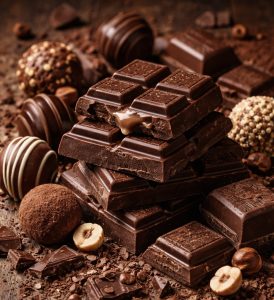
Chocolate has been rebranded. A confectionery indulgence is now

  • “rich in flavanols”
  • “cardioprotective”
  • longevity insurance, and
  • a medical intervention.

We’re told dark chocolate lowers blood pressure, improves insulin sensitivity, enhances mood, protects the brain, and even supports heart health. The higher the cacao percentage, the more medicine-like dark chocolate becomes.

Health Halo Built on Inflated Science

Most of the glowing claims rely on studies using isolated cocoa flavanol extracts at doses far higher than those in commercial chocolate. To reach those levels through ordinary chocolate, a person would have to consume impractical—and metabolically costly—amounts. What real chocolate delivers is calories, sugar, fat, oxalate, and heavy metals. All are worthy of ignoring in favor of its mythical powers.

News headlines, social media posts, or wellness marketing will not whisper any caution or caveats. Its failure to deliver doesn’t trend, and won’t be found in captions, or even the fine print. 

What the Metabolic Data Show

Chocolate is naturally high in oxalate. Oxalate is the compound central to calcium oxalate kidney stone formation. In 1989, researchers published in Nephron (Balcke et al.) demonstrated that consuming 50–100 grams of chocolate increased urinary oxalate excretion to 235–289% of fasting levels in healthy men.

These peak blood and urine values are comparable to those observed in primary hyperoxaluria, a deadly metabolic disorder known to cause vasculitis (inflammation that destroys blood vessels), bone loss, kidney failure, and early death.

Five years later, Nguyen et al. (1994) reported in Hormone and Metabolic Research that a single 100-gram dark chocolate bar increased urinary calcium by 147% and urinary oxalate by 213% within hours. That pairing—hypercalciuria plus hyperoxaluria—produces precisely the urinary chemistry known to favor calcium oxalate stone formation.

Unlike the familiar “flavanols are medicine” narrative, these findings were not speculative. They were controlled metabolic measurements.

Further nephrology research has clarified why this matters. Robertson and Peacock (1980) showed that urinary oxalate correlates more strongly with calcium oxalate stone formation than urinary calcium. Jaeger and Robertson (2004) detailed how dietary oxalate is absorbed throughout the gastrointestinal tract, depending on solubility, calcium availability, and intestinal conditions.

Subsequent studies by leading oxalate researchers demonstrated that dietary oxalate contributes substantially more to urinary oxalate than previously believed. Holmes et al. (2001) estimated that up to 50% of urinary oxalate may originate directly from dietary sources, particularly when dietary calcium is insufficient. Meals produce sharp spikes in urinary oxalate concentration, followed by wash-out periods during fasting—conditions that may favor intracellular crystal formation and tissue injury.

In practical terms, this means oxalate is not inert.

It is absorbed. It circulates. It is managed. It must be excreted. The process is stressful for cells and tissues. Repeated exposure means repeated spikes—and accumulation. That is inflicting damage you cannot see. None of this appears in glossy “eat more dark chocolate” features.

Heavy Metals: The Other Omission

Oxalate isn’t the only missing piece.

Food-safety literature on cocoa and chocolate (Winkler, 2014) focuses heavily on contamination control, because cocoa is vulnerable to heavy metals. Cadmium and lead contamination are well-documented issues in commercial chocolate products.

Heavy metals accumulate. They do not enhance vascular function. They do not reverse aging. They increase the toxic burden. The health halo message rarely includes that caveat.

A Halo Was Built on “Nutrifluff”

This silence about dose and toxins in chocolate is not accidental.

In 2018, Nic Fleming’s Guardian investigation, “The Dark Truth About Chocolate,” described how industry funding, selective framing, and careful messaging helped elevate chocolate from confectionery to cardiovascular ally. He wrote, “Many people have swallowed the idea that chocolate is a ‘superfood’. Except it isn’t.”

Many cocoa studies examined isolated flavanol extracts at pharmacologic doses. Initially, scientific observations were issued cautiously. But then wishfully and prematurely stretched into widely accepted lifestyle advice: “eat darker chocolate and more of it.”

Sensational research findings from highly preliminary studies about a single food or nutrient get flattened into headlines. “May improve endothelial function” became “good for your heart.” Nutrition scientist Marion Nestle has a word for this kind of phenomenon: “nutrifluff.” Real studies — selectively amplified — until they resemble proof.

The science didn’t have to be fraudulent, just short-sighted. It’s too easy to see what we want to see and ignore the rest.

Science Hoax Believed

Case in point how the system seems vulnerable to fantasy and exaggeration, remember the 2015 “Slim by Chocolate” hoax. Multiple journals accepted a deliberately fake and flawed “study” claiming that eating chocolate could aid weight loss, without thorough peer review. Despite the obvious flags—published in a journal with questionable credibility and a small sample size—the science media fell for it.

Major news outlets worldwide proclaimed, “Chocolate Can Help You Lose Weight!” Routinely, science journalists fail in their duty to rigorously fact-check or look for a more balanced attitude in their reporting. Being the first to report sizzle matters more than being factually correct and skeptical.

The Medical Endorsement of Weak Science

It’s worth noting that the chocolate health narrative didn’t emerge from nowhere.

“Industry-funded research tends to set up questions that will give them desirable results,” Fleming explains. “Chocolate manufacturers have poured huge sums into funding nutrition science that has been carefully framed, interpreted and selectively reported to cast their products in a positive light over the last 20 years.”

It may be especially easy for researcher to find positive outcomes for chocolate eating. Study volunteers, like most people, have positive expectations about chocolate because they like it. They are therefore primed, preconditioned – to respond positively. Pleasure just might lower blood pressure, for example.

Registered dietitians, cardiologists, and academic researchers have publicly commented on potential benefits of cocoa flavanols — particularly for blood vessel function, circulation, and blood pressure. Institutions such as Johns Hopkins Medicine and NIH-funded researchers have discussed observational findings, including studies of the Kuna people, whose traditional cocoa consumption sparked decades of scientific interest.

These expert reports are typically referring to flavanol compounds — not candy bars. Generally they emphasize caveats: high-cocoa content and context of moderation within an otherwise complete or varied diet, not daily therapeutic dosing.

A more complete story is inconvenient

The antioxidant narrative was seductive — and largely uncontested. Seeking only the good news, researchers never asked what comes with flavanols in real chocolate: oxalate load, mineral disruption, cadmium, and lead. Enthusiasm for positive publishable results and a media-friendly topic gained a life of its own. Adding nuance and a dose of reality would just spoil the party.

Once marketing took over, there was no room for the biological costs. Oxalates, heavy metals, mineral disruption—who cares?  You need to care.

Spin or Informed Awareness?

Chocolate does not have to prove itself medicinal. The spin only has to sound plausible. The real risk is the belief built on the myth—strong enough to:

  • fuel a marketplace built on false promises,
  • shape thinking, daily habits, and shared culture,
  • create blinders. 

Willful ignorance does not build a healthy future. When a food that can raise urinary oxalate by nearly 300% is marketed as preventive medicine, that’s malpractice. Acknowledging this isn’t fearmongering. It’s informed awareness.

Chocolate is not cardiovascular therapy. It is candy with a marketing department.

Enjoy it occasionally, if you choose—but let’s retire the fiction that an 85% label turns chocolate into healthcare.

Respect your biology, and don’t confuse branding with medicine.

Selected References

Balcke, P., Zazgornik, J., Sunder-Plassmann, G., et al. (1989). Transient hyperoxaluria after ingestion of chocolate as a high-risk factor for calcium oxalate calculi. Nephron, 51(1), 32–34

Bohannon, J. (2015). I Fooled Millions Into Thinking Chocolate Helps Weight Loss. io9.

Fleming, N. (2018). The Dark Truth About Chocolate. The Guardian.

Henkel, R., & Agarwal, A. (2020). Harmful Effects of Antioxidant Therapy. In S. J. Parekattil, S. C. Esteves, & A. Agarwal (Eds.), Male Infertility: Contemporary Clinical Approaches, Andrology, ART and Antioxidants (pp. 845–854). Springer International Publishing. https://doi.org/10.1007/978-3-030-32300-4_68

Holmes, R. P., Goodman, H. O., & Assimos, D. G. (2001). Contribution of dietary oxalate to urinary oxalate excretion. Kidney International, 59(1), 270–276. https://doi.org/10.1046/j.1523-1755.2001.00488.x

Jaeger, P., & Robertson, W. G. (2004). Role of dietary intake and intestinal absorption of oxalate in calcium stone formation. Nephron Physiology, 98(2), 64–71.

Nguyen, N. U., Henriet, M. T., Dumoulin, G., et al. (1994). Increase in calcinuria and oxaluria after a single chocolate bar load. Hormone and Metabolic Research.

Robertson, W. G., & Peacock, M. (1980). The cause of idiopathic calcium stone disease: Hypercalciuria or hyperoxaluria? Nephron, 26(3), 105–110.

August 24, 2015 by Sally K Norton

Radio Program: Gut Health, Inflammation, and Oxalate in Foods

Check this out. I was recently interviewed about Oxalates and Health by Sunny Gardener on Lightly On The Ground Radio on 97.3 WRIR, in Richmond VA. This show aired on Aug. 12, 2015.

Sunny and I discussed the back bone of all disease: inflammation.  We cover the connection between changes in the bacteria in our colons and increased susceptibility to inflammation.  We touched on oxalates in foods as a possible contributor to gut health deterioration and inflammatory illnesses.

https://sallyknorton.com/wp-content/uploads/2015/08/2015-08-12-skn-on-lightlyontheground.mp3


Thank you to WRIR’s Lightly On The Ground, produced in Richmond VA.

May 16, 2015 by Sally K Norton

Catastrophic Complication of Weight-Loss Surgery: Kidney Failure

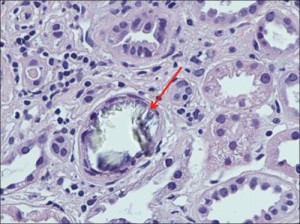
Figure 1 Nagaraju (2013). Large intraluminal translucent crystals of calcium oxalate, tubular epithelial degeneration (foamy cytoplasm, pyknosis, karyorrhexis, indistinct cell borders, dilated lumina), lymphocytic infiltration in the interstitium (H and E, ×400)

Figure 1 Nagaraju (2013). Large intraluminal translucent crystals of calcium oxalate, tubular epithelial degeneration (foamy cytoplasm, pyknosis, karyorrhexis, indistinct cell borders, dilated lumina), lymphocytic infiltration in the interstitium (H and E, ×400)

A case of kidney failure after bariatric surgery is stopped with low-oxalate diet.

Canadian nephrologists reported a case of life-threatening kidney damage caused by kidney deposits of oxalate crystals.1 The doctors performed a kidney biopsy on their patient, a 54-year old man, 20 months after duodenal switch weight-loss surgery. His blood creatinine levels had tripled over the previous nine months. The biopsy found oxalate crystals causing tubular damage and atrophy, fibrosis, and inflammation. They also noted hardening of the blood-filtering glomerular capillaries.

The patient was treated with a low-oxalate diet, calcium citrate (1,000 mg 3 times a day with meals), high water consumption, and the drug cholestyramine to help reduce oxalate absorption. This stabilized his blood creatinine levels and his urine oxalate dropped by a third from 99 to 63mg per day. Normal urine oxalate is under 40-45 mg/day. The authors’ want practicing clinicians to be aware of the increased risk of excessive absorption of oxalates from food following weight-loss surgery (“secondary enteric hyperoxaluria”) which can lead to kidney stones and life-threatening renal failure due to oxalate-induced kidney damage.

This case illustrates: 1) changes to gut function can alter oxalate absorption; 2) oxalates in foods can cause tissue damage; and 3) this process may be arrested by limiting oxalate absorption with a low-oxalate diet and supportive therapies.

Interestingly, this patient’s urine oxalate levels, although lower, remained elevated (63mg/day) despite effective diet therapy. Consistent with reports from cases of genetic oxalosis, this may indicate that the patient’s tissues are shedding existing oxalate deposits in the kidney and elsewhere in the body. The clearing of oxalate deposits may contribute to urinary oxalate, perhaps for years. It is likely that shrinking tissue oxalate deposits leave in their wake persistent renal scarring and tissue damage elsewhere.

Oxalate deposits can develop over time after either Roux-en-Y gastric bypass surgery (RYGB) or duodenal switch surgery. These surgeries can trigger an increase in the absorption of dietary oxalates (perhaps due to bile salts in the colon and fat malabsorption in the small intestine). This potential complication -the possibility of increased oxalate absorption leading to high urine oxalates and, eventually, kidney failure – is not typically discussed at the time of consent to surgery.2 Nor are these patients typically told that they can minimize the risk by modifying their diet to avoid oxalates in foods. Discharge and follow-up counseling and education should include instructions for the low-oxalate diet. The gastric banding procedure is not likely to cause this problem.2

Oxalate deposits in the body develop gradually and often without symptoms.3 Although rarely prescribed by clinicians, a low oxalate diet can help avert the risk of too much oxalate and may be especially important for people with intestinal and digestive problems, including, but not limited to weight-loss surgery.4 Other surgical procedures (intestinal resection, ileostomy, bladder diversion surgery) and GI conditions such as irritable bowel syndrome (IBS), celiac disease, Crohn’s disease, small intestinal bacterial overgrowth (SIBO), pancreatic insufficiency, or poor fat digestion (steatorrhea) can also contribute to excessive absorption of oxalates in the digestive tract.

The renal damage caused by oxalates may not be reversible so it is important to start the low oxalate diet as early as possible. Anyone who is increasing their water intake or taking calcium citrate to reduce absorption of oxalates needs to be aware that timing is important. Water with meals can increase oxalate absorption, so drink fluids between meals. Also, calcium citrate tablets need time to dissolve, so take them about 20 minutes before meals to maximize the oxalate sequestration effects.

Key Point: Dietary oxalates can cause kidney failure after bariatric surgery. The progression of the disease can be halted by the low-oxalate diet, if implemented correctly and early enough.

For my low-oxalate grocery shopping list click here.

References

  1. Nagaraju SP, Gupta A, McCormick B. Oxalate nephropathy: An important cause of renal failure after bariatric surgery. Indian J Nephrol. 2013;23(4):316-318. doi:10.4103/0971-4065.114493.
  2. SenthilKumaran S, David SS, Menezes RG, Thirumalaikolundusubramanian P. Concern, counseling and consent for bariatric surgery. Indian J Nephrol. 2014;24(4):263-264. doi:10.4103/0971-4065.133045.
  3. Marengo S, Zeise B, Wilson C, MacLennan G, Romani AP. The trigger-maintenance model of persistent mild to moderate hyperoxaluria induces oxalate accumulation in non-renal tissues. Urolithiasis. 2013;41(6):455-466. doi:10.1007/s00240-013-0584-5.
  4. Lieske JC, Tremaine WJ, De Simone C, et al. Diet, but not oral probiotics, effectively reduces urinary oxalate excretion and calcium-oxalate supersaturation. Kidney Int. 2010;78(11):1178-1185. doi:10.1038/ki.2010.310.

Further Reading about Bariatric Surgery and Oxalates

  1. Agrawal V, Liu XJ, Campfield T, Romanelli J, Enrique Silva J, Braden GL. Calcium oxalate supersaturation increases early after Roux-en-Y gastric bypass. Surg Obes Relat Dis Off J Am Soc Bariatr Surg. 2014;10(1):88-94. doi:10.1016/j.soard.2013.03.014.
  2. Ahmed MH, Byrne CD. Bariatric surgery and renal function: a precarious balance between benefit and harm. Nephrol Dial Transplant. 2010;25(10):3142-3147. doi:10.1093/ndt/gfq347.
  3. Asplin JR. Hyperoxaluria and Bariatric Surgery. In: AIP Conference Proceedings. Vol 900. AIP Publishing; 2007:82-87. doi:10.1063/1.2723563.
  4. Froeder L, Arasaki CH, Malheiros CA, Baxmann AC, Heilberg IP. Response to Dietary Oxalate after Bariatric Surgery. Clin J Am Soc Nephrol CJASN. 2012;7(12):2033-2040. doi:10.2215/CJN.02560312.
  5. Kumar R, Lieske JC, Collazo-Clavell ML, et al. Fat Malabsorption and Increased Intestinal Oxalate Absorption are Common after Rouxen-Y Gastric Bypass Surgery. Surgery. 2011;149(5):654-661. doi:10.1016/j.surg.2010.11.015.
  6. Lieske JC, Mehta RA, Milliner DS, Rule AD, Bergstralh EJ, Sarr MG. Kidney stones are common after bariatric surgery. Kidney Int. October 2014. doi:10.1038/ki.2014.352.
  7. Nasr SH, D’Agati VD, Said SM, et al. Oxalate Nephropathy Complicating Roux-en-Y Gastric Bypass: An Underrecognized Cause of Irreversible Renal Failure. Clin J Am Soc Nephrol CJASN. 2008;3(6):1676-1683. doi:10.2215/CJN.02940608.
  8. Patel BN, Passman CM, Fernandez A, et al. Prevalence of Hyperoxaluria After Bariatric Surgery. J Urol. 2009;181(1):161-166. doi:10.1016/j.juro.2008.09.028.
  9. Ritz E. Bariatric surgery and the kidney – Much benefit, but also potential harm. Clin Kidney J Clin Kidney J. 2013;6(4):368-372.
  10. Whitson JM, Stackhouse GB, Stoller ML. Hyperoxaluria after modern bariatric surgery: case series and literature review. Int Urol Nephrol. 2010;42(2):369-374. doi:10.1007/s11255-009-9602-5.

Search on SallyKNorton.com

Shopping Cart

Number of items in cart: 0

  • Your cart is empty.
  • Total: $0.00
  • Checkout
Click to sign up for email list

Upcoming Events

  • Group Meeting and Presentation

    March 19, 2026 @ 3:00 pm - 5:00 pm
    US Eastern Time
    See more details

  • Group Meeting and Presentation

    April 8, 2026 @ 11:00 am - 1:00 pm
    US Eastern Time
    See more details

Connect

  • Home
  • About
  • Shop
  • Recipes
  • Support
  • Blog
  • Contact
  • Table of Contents
  • Privacy Policy

Visit Sally’s Other Sites

  • YouTube
  • LinkedIn
  • Facebook
  • Instagram

Copyright © 2026 — Sally K. Norton • All rights reserved.


Loading Comments...